


Cover photo by Tom Fisk
To effectively analyze innovations in the agriculture industry, we begin with problems.
 Projections indicate that food production must increase by 70% to sustain a global population of 9.7 billion by 2050. With rising consumption demands, available agricultural land is diminishing, necessitating more efficient agricultural methodologies. (Population and income drive world food production projections)
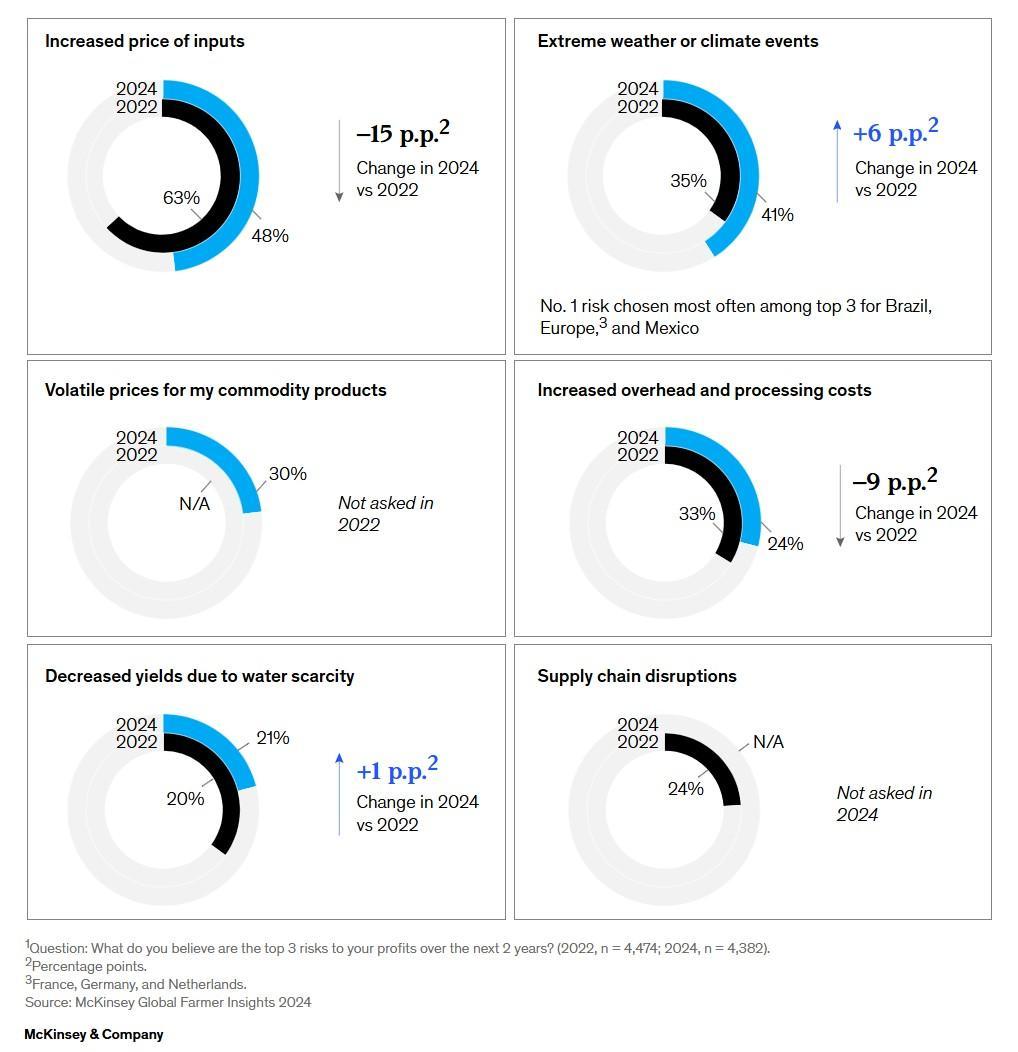
According to McKinsey's research, significant impediments to farmer profitability include: Periodic shortages of inputs such as fertilizers, seeds, and agrochemicals that directly impact production costs, alongside price escalations in these commodities. Additionally, labor deficiencies impeding timely harvesting and market delivery, coupled with extreme weather phenomena including drought, flooding, and excessive temperatures that substantially reduce crop yield and quality, constitute agricultural producers' most critical supply chain disruptions.(Global Farmer Insights 2024) Digitalization represents a prerequisite for monitoring real-time price and supply fluctuations. The conventional agricultural paradigm characterized by unpredictable price and supply variations manifests as elevated consumer prices and periodic scarcity of certain commodities.
The environmental degradation attributable to conventional and inefficient agricultural practices has reached a magnitude that can no longer be disregarded. The sector contributes 12% of global greenhouse gas emissions and utilizes %70 of all clean water resources. Emerging regulatory frameworks mandate taxation of environmental impact throughout the entire value chain from production to consumption. (Tackling climate change in agriculture: A global evaluation of the effectiveness of carbon emission reduction policies)
Substantial challenges necessitate collaborative solutions.
A proportion of these collaborations are developed by large-scale enterprises possessing capital resources and access to diverse expertise domains.
With the help of technology startups, Small and Medium Enterprises (SMEs) also assume critical roles in the development of novel technologies and business models.
SMEs have a real motivation to collaborate with startups to address inefficiencies impacting their financial resources and operational performance. Solutions that generate sectoral value may attract global corporate interest. The journey commencing with addressing SME requirements can potentially integrate into global corporate product offerings aimed at creating novel and comprehensive value propositions within the marketplace.
A critical success criterion exists for solutions that effectively combine technological expertise from startups with sectoral experience from agricultural SMEs:
"The co-creation of authentic value for diverse market participants."
We have categorized successful collaborative examples that establish comprehensive digital connectivity according to organizational scale. This article will present examples of SMEs collaborating with technology startups.
Valuable applications for SMEs have constituted solutions that optimize labor requirements while mitigating environmental impact, reducing production costs, and enhancing resilience against supply chain fluctuations.
-
SMEs & Tech Startup Partnerships
To increase collaboration and new opportunities, creating value for small and medium-sized farming operations comes first. Startups can combine their technical know-how through proof-of-concept projects with farms' industry expertise. When a solution creates value for many small businesses, large companies with end-to-end market strategies integrate these solutions into their products or acquire them outright. In our next article, we'll take a closer look at startups like CropX, Blueriver, BearFlag, Leaf, and Agcor, whose journeys began with farm projects and continued with global companies.
Gavin Owens, who supplies the Guinness beer company, stores over 45 million kilograms of grain in 8 large storage units in rainy southern Ireland. To meet Guinness's strict quality standards, he partnered with TeleSense (founded in 2013). TeleSense automatically monitors storage temperature and humidity, providing continuous grain condition updates. This partnership helped Owens save on energy costs through more efficient drying. A mere 1% change in moisture content can generate hundreds of thousands of dollars in savings for farms storing agricultural products. Telesense simplifies quality management and reduces costs for Guiness brewery supplier)
Mehmet Memecan, who worked in fertilizer sales and supply in the US and Switzerland markets for many years, founded Tarfin in 2017 to help small farmers access capital. Farmers' biggest challenge for small operations is cash flow, while dealers struggle with the burden of credit sales. The marketplace created through Tarfin's platform and mobile app provides financial benefits to small businesses. Having served over 63,000 farmers so far, this fintech startup has become one of Europe's notable innovators through its value proposition for small businesses.
Another local startup founded in 2017, Doktar, offers precision farming software, hardware, and consulting for farmers. Working with farmers in Turkey's Thrace region, they focused on improving water efficiency. They developed a plan for Tarla Mera and Havsa farms that optimizes soil health, manages water resources efficiently, and ensures long-term sustainability. Although Havsa Farm initially saw lower yields when switching to regenerative farming, they experienced significant soil health improvements over time. Their needs for pesticides, fertilizers, and fuel all decreased. With data from 500,000 farmers, Doktar helps agricultural companies build better relationships with farmers, gain predictive insights, and adapt their products and services accordingly.

(Doktarproducts: Orbit, PestTrap, Filiz, CropMap, FieldFlow, SoilScanner, FlowMeter, PestTrap Air, Phenology Camera)
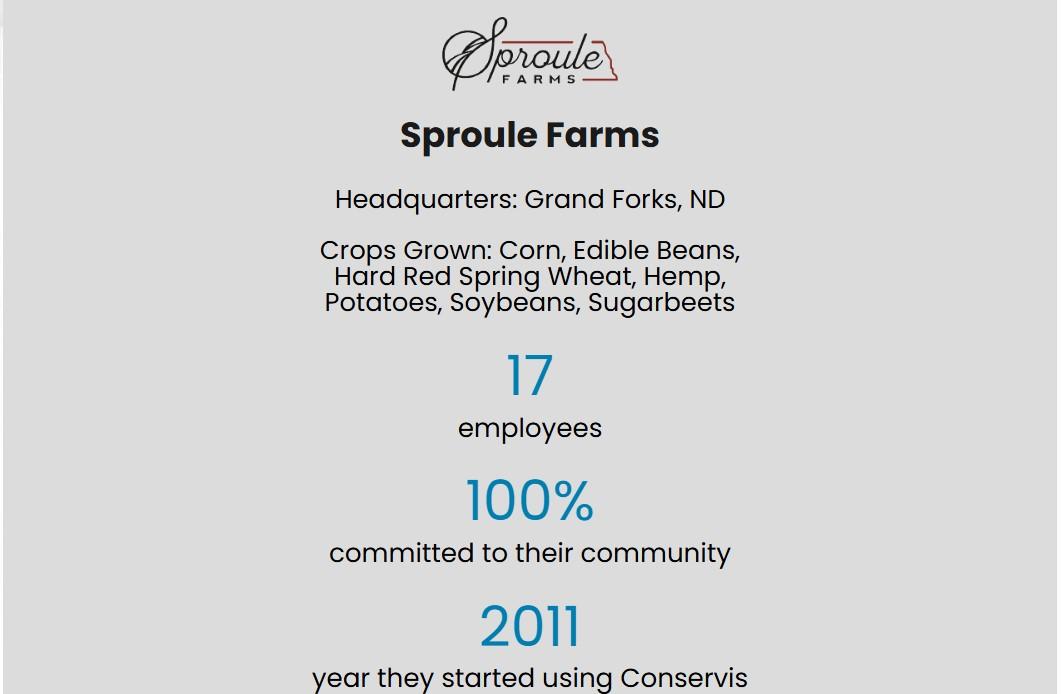
Sproule Farms in North Dakota, a Frito Lay supplier founded in 1993, began working with Conservis in 2011. Conservis, founded in 2009, improved both field operations and administrative processes by providing traceability, real-time data, and record-keeping capabilities. This partnership increased profitability by tracking planting, harvesting, and yield data in real time. It also helped secure better prices by quickly generating product traceability documentation and insurance paperwork for customers like Frito Lay. (Sproule Farms Case Study)
South African family business Marlenique Estate started the country's first proof-of-concept study with SupPlant in 2018 to improve the health and productivity of its lemon trees. SupPlant created an algorithmic system that adjusts irrigation based on plants' real-time needs throughout the growing season, using a network of soil moisture sensors, plant and fruit growth sensors, and weather sensors. This innovative approach significantly increased the test plots' total yield and fruit size, resulting in higher income per hectare.
Chris Condon, an Australian family farmer, stored 60-100% of annual grain production using Excel spreadsheets and paper receipts for critical marketing decisions. Chris partnered with AgriDigital as a central hub for live data entry. By creating digital connections between fields, grain silos, and the main office, he saved on labor while developing the infrastructure needed to work with large suppliers. The value created in family farms also created opportunities for major industry players. Rabobank, a Dutch cooperative banking company specializing in agriculture, food, and beverage sectors, invested in AgriDigital in 2018. AgriDigital continues developing its blockchain-based agricultural supply chain platform by working with businesses of all sizes. (Transforming Agricultural Supply Chains Using Blockchain)
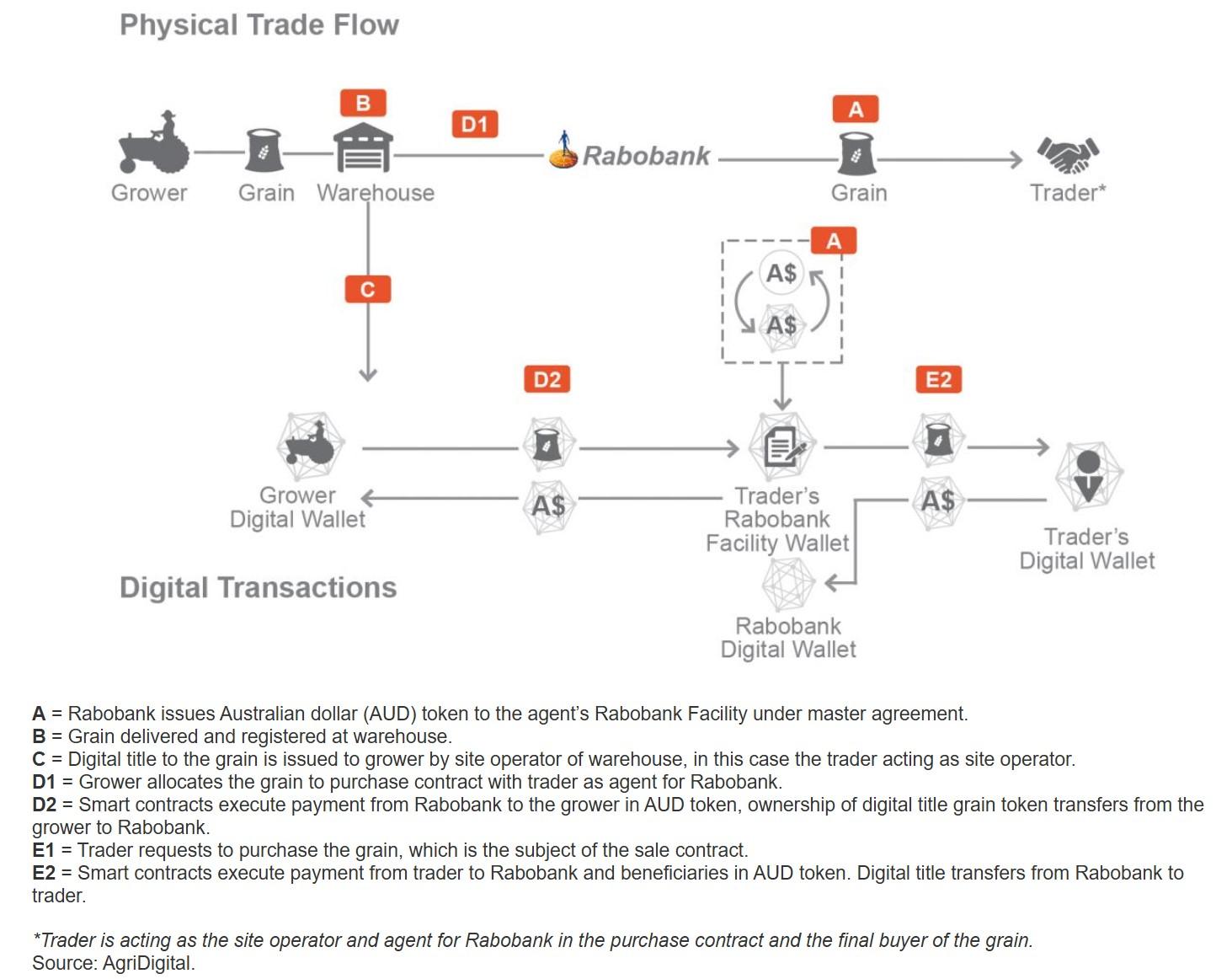
(Rabobank AgriDigital Trade Flow)
Schoeman Boerdery, a South African agricultural producer and exporter, partnered with AgrigateOne (founded in 2019) to achieve productivity gains by digitalizing export operations. AgrigateOne provided real-time visibility throughout the entire export process from farm to final European destination, allowing Schoeman to monitor each step, improve coordination, and make data-driven decisions. In the last three years, Schoeman has seen significant growth with its direct export strategy. (How Schoeman Transformed Their Export Process with AgrigateOne)
- SMEs and Tech Startup Partnerships in Turkey
Turkey has both unique needs and challenges shared with global markets. While agricultural products make up 14% of the country's exports, its largest export market (Europe at 45%) is demanding CBAM-compliant digital transformation starting in 2026. However, Turkey still lags behind Europe in digitalization and faces labor challenges. Agricultural workforce participation has dropped from 35% in the 2000s to just 16-18% in the 2020s.
One indicator of the supply-demand mismatch is Turkey's annual food inflation rate of 70-75%, according to official statistics.
Through examples, we've shown how small and medium-sized companies can develop solutions by partnering with startups. Regardless of company size, those who solve industry problems play a critical role in the market's future.
Evidence that challenges can become opportunities through collaboration comes from Turkish startups that have developed solutions locally and expanded internationally (Move On, AgroVisio, ForFarming, Fazla, Tarla.io et al)